
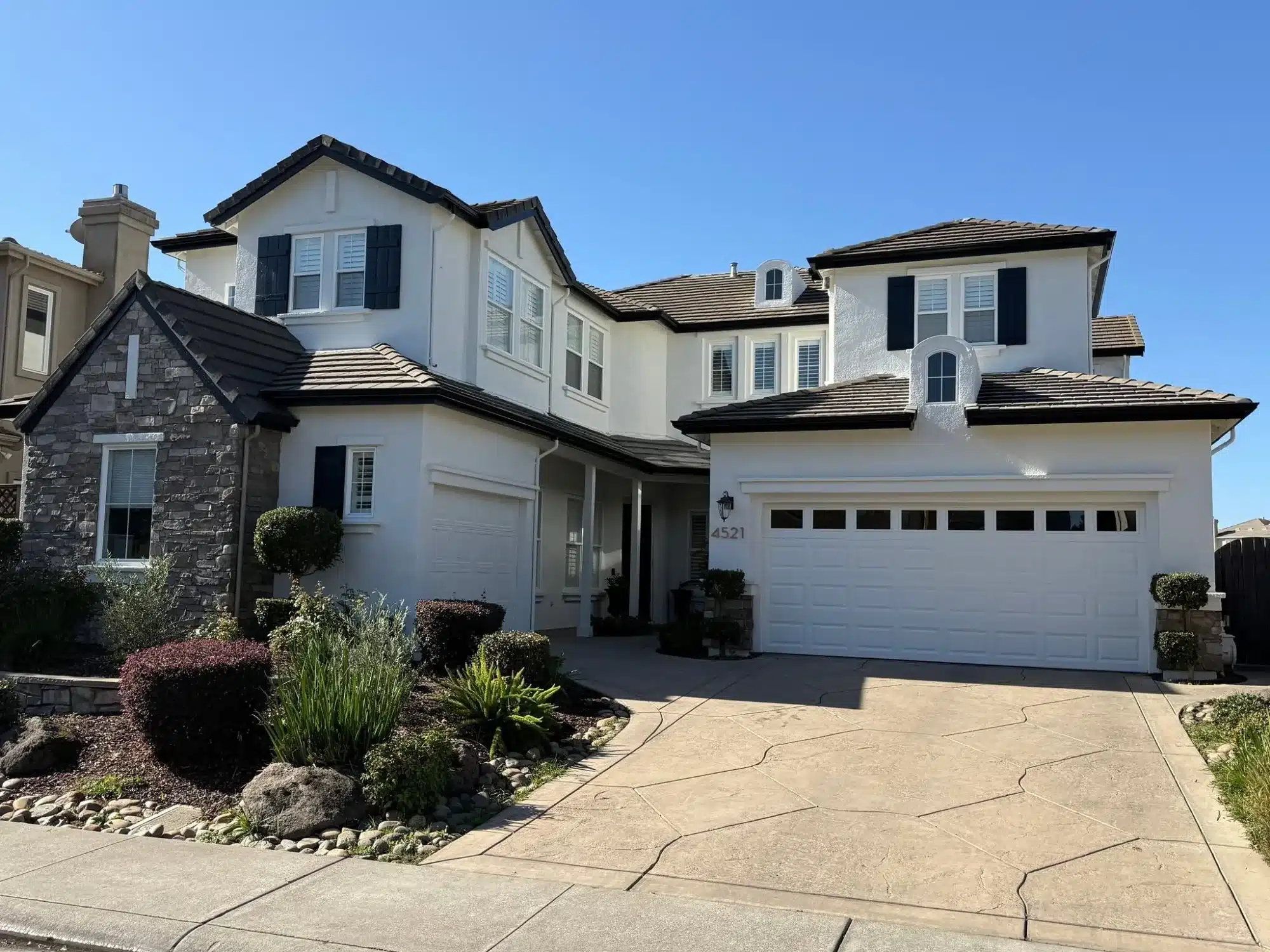
Homeowners often ask us for the best temperature to paint outside, and most assume summer is the answer. In Stockton, that assumption can backfire, because our average July high sits right around 95°F. The best time to paint house exterior surfaces here is usually spring or fall, and our team plans every job of exterior house painting in Stockton around that reality.
This post compares every season using official weather data for Stockton. You will see which months give paint the best chance to last, how we handle summer heat, and why waiting for perfect weather is not always the right call.
Key Takeaways

What Is the Best Temperature to Paint Outside?
There is no single magic number. Every exterior paint lists its own temperature range on the label, and we follow it for each product we use. The bigger question in Stockton is usually heat, not cold.
Dunn-Edwards, a paint maker based in the Southwest, advises painters to avoid stacking more than two or three of these conditions at the same time:
Picture a dark gray stucco wall facing west on a July afternoon. That single wall can check four boxes at once. The same wall at 8 a.m. in October may check none of them.
How Hot Is Too Hot to Paint Outside in Stockton?
Heat does not stop a paint job, but it changes how the paint behaves. Dunn-Edwards explains that latex paint can dry so fast in heat that it never fully forms its protective film. It looks fine on day one and may not hold up as long.
Darker colors add to the problem. They absorb more heat, which makes the surface move more and can strain the bond with the coats underneath. Wood siding is especially sensitive to this.
Summer still works with the right plan. Our crews paint year-round using weather-appropriate products, and on hot days we follow a simple routine:

The Best Time to Paint House Exterior Surfaces in Stockton: Month by Month
Here is how a typical year looks at Stockton Metropolitan Airport. These are NOAA 1991 to 2020 climate normals, the same 30-year averages the National Weather Service uses.
| Months | Avg. High | Avg. Low | Avg. Rain | Our Take |
|---|---|---|---|---|
| Dec to Feb | 57°F to 63°F | 38°F to 41°F | 2.4 to 2.7 in. | Wettest stretch. Dry windows are short. |
| March | 69°F | 44°F | 1.9 in. | Warming, but rain is still common. |
| April and May | 75°F to 83°F | 47°F to 53°F | 0.6 to 1.1 in. | The spring sweet spot |
| June | 90°F | 58°F | 0.1 in. | Good mornings, hot afternoons |
| July and Aug | 94°F to 95°F | 60°F to 61°F | Near 0 in. | Right at the 95°F line. Plan around the sun. |
| September | 90°F | 58°F | 0.1 in. | Dry, with heat easing late in the month |
| October | 80°F | 51°F | 0.7 in. | Often the most balanced month |
| November | 67°F | 43°F | 1.4 in. | Workable until the rains settle in |
Look at April, May, and October. Mild highs, cool nights, and little rain give paint the steadiest conditions of the year. That is why the best time of year to paint house exterior surfaces in the Valley is usually a shoulder season, not the middle of summer.
Spring vs. Summer vs. Fall vs. Winter
Every season can work in Stockton. Each one simply comes with a different tradeoff.
Your home matters too. Sun exposure, siding type, and color all change the picture. Our exterior painting services start with an on-site look at those details before we suggest a schedule.
Can You Paint Your Stockton Home in Winter?
Yes, with limits. Stockton winters are mild compared to much of the country, but they are wet. December through February each average about 2.4 to 2.7 inches of rain, the most of any months.
Rain is the real challenge, not cold. Paint needs a clean, dry surface going on and dry weather while it sets. A sunny afternoon between storms can still leave siding damp from the night before.
That is why winter projects take more planning. We watch for multi-day dry stretches, check surfaces before we paint, and move the schedule when the forecast changes. For many homes, winter is the right time to book the estimate and handle repairs, with painting set for spring.
Why Waiting for Perfect Weather Can Cost You
Timing matters, but so does the condition of your home today. Peeling paint and open gaps let winter rain reach the wood underneath. Dry rot and moisture damage can spread while you wait for an ideal month.
If your exterior already shows peeling, cracking, or soft trim, the right first step is an inspection, not a calendar. Repairs can often be planned now, with painting scheduled for the best available window.

How We Plan Your Project Around the Weather
You should not have to track forecasts yourself. Here is how our team handles timing on every exterior project:
No deposit is required, and our no-surprise guarantee means the price we quote is the price you pay. That makes it easier to book early without worrying about changes later.